
Reliability is near the top of most buyers' wish lists, and it is one of the hardest things to judge from a showroom or a test drive. The first version of this post ranked ten European cars using breakdown reports and owner reviews. This refreshed version goes back to the best public source of breakdown data in Europe, the German motoring club ADAC, and its latest figures 1.
The short answer: the most reliable European cars in the ADAC data are a long list of Audi, BMW, Mercedes-Benz and Volkswagen Group models, and electric cars broke down far less than petrol and diesel ones. The longer answer, with the limits of the data, follows.
Who ADAC is and where its data comes from
The Allgemeiner Deutscher Automobil-Club, or ADAC, was founded in Stuttgart in 1903 and is based in Munich 2. It is Europe's largest automobile association, with about 22.2 million members reported in 2025 2. Its yellow patrol vehicles, nicknamed the "Yellow Angels", attend millions of breakdowns a year 2.
That scale is what makes its breakdown statistics useful. ADAC says its patrols handle roughly half of all breakdowns in Germany 1.
How the breakdown statistics work
The 2026 statistics were published on 23 April 2026 and cover the breakdowns ADAC attended during 2025 1. They rank 158 model series from about 27 manufacturers 1.
A few rules shape the results 1:
- Only technical faults count. Breakdowns handled by a maker's own assistance service are left out, and so are self-inflicted ones such as running out of fuel.
- Only common models are rated. A model series needs thousands of registrations in a given year before ADAC rates it, so rare cars do not appear.
- Cars are compared by age. The figures cover cars first registered between 2016 and 2023, so a model is judged against others of the same age 1.
ADAC expresses the results as breakdowns per 1,000 vehicles, and it rated 74 model series as highly reliable 1.
The most reliable European cars by class
ADAC names the best performers class by class 1. These are the European models it lists among the best in each class.
Small and city cars
Among the smallest cars, the best European performers include the Dacia Spring, Škoda Citigo and VW up! 1. In the next class up, ADAC names the Audi A1, BMW i3, Renault Zoe, Seat Ibiza, Škoda Fabia and VW Polo 1. Small SUVs from the same brands are there too, such as the Seat Arona, Škoda Kamiq and VW T-Cross 1.
Small family cars and compact SUVs
This is the busiest class, and the Volkswagen Group dominates it. ADAC's best performers include the Audi A3, Q2 and Q3, the BMW 1 Series, 2 Series and X2, and the Mercedes-Benz A-Class and B-Class 1. The Volkswagen Golf, ID.3, T-Roc and Tiguan are there too, along with the Cupra Born, Formentor and Leon 1.

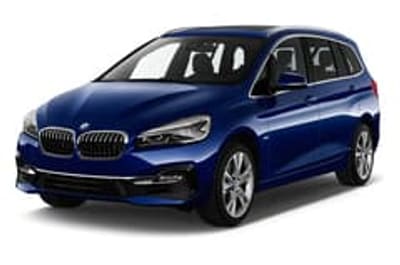
ADAC's BMW entry here covers the 2 Series range including the Active Tourer and Gran Tourer 1, the tall family versions shown below.
Mid-size cars and SUVs
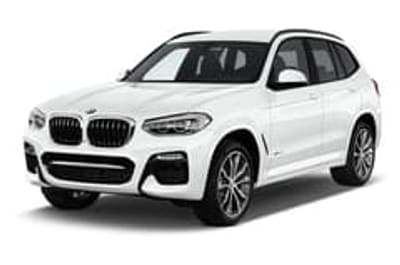
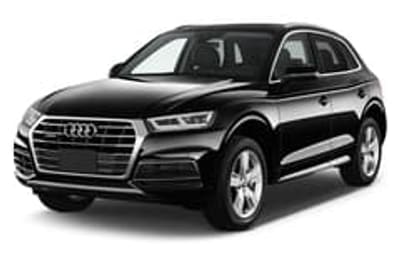
In the mid-size class, the best European models include the Audi A4, A5 and Q5, and the BMW 3 Series, 4 Series and X3 1. The electric BMW i4 and Volkswagen ID.4 also made the list, as did the Mercedes-Benz GLB and the Volkswagen Passat 1. Two more electric SUVs, the Audi Q4 e-tron and Škoda Enyaq, complete the European entries in this class alongside the seven-seat Seat Tarraco 1.


Large cars and SUVs
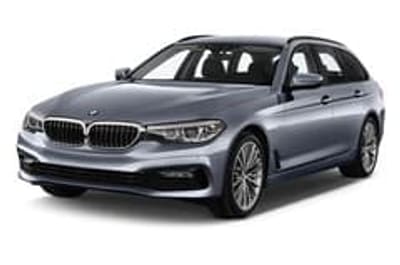
In the upper mid-size class, ADAC names the BMW 5 Series and X5, the Mercedes-Benz GLE and the Volkswagen Arteon, along with Audi's large electric SUV 1. Among vans, the Mercedes-Benz Sprinter is the best performer 1.
What happened to the rest of our original list
Seven of the ten cars on our first list appear among ADAC's 2026 best performers by name: the Audi A3 and Q5, and the BMW 2 Series, 3 Series, 4 Series, 5 Series and X3 1.
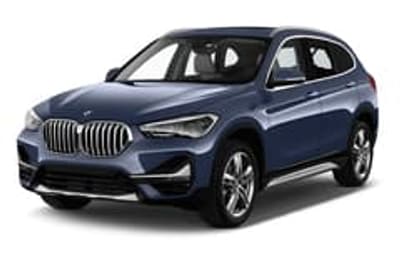
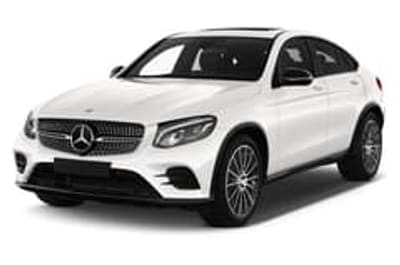
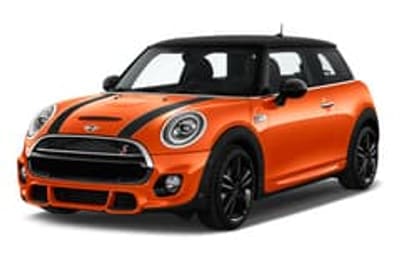
Three do not. ADAC's best-in-class lists for this year do not name the petrol or diesel BMW X1 (the electric iX1 is on the list), the Mercedes-Benz GLC or the Mini 1. That is not the same as calling them unreliable: none of them appears on ADAC's lists of the worst performers either 1. It simply means the data does not single them out either way.
Cars are getting more reliable
The headline of ADAC's 2026 report is good news for every buyer: modern cars are not breaking down more often 1. Between 2015 and 2025, the chance of a breakdown fell from 3.6% to 2.1% for five-year-old cars, and from 6.5% to 3.1% for ten-year-old cars 1.

That matters when you shop used. A well-kept car of eight or ten years old is, on these figures, much less likely to leave you stranded than a car of the same age was a decade ago.
Electric cars broke down less
One of the clearest findings in this year's report was about drivetrains 1. Among two-year-old cars, electric vehicles had 2.1 breakdowns per 1,000 vehicles in 2025, against 5.8 for petrol and diesel cars 1. By age five the gap was still large, at 10.3 for electric cars against 17.4 1.
ADAC's explanation is simple: electric cars have fewer of the parts that wear out 1. They have no clutch or exhaust, and no engine oil to change 1. It also notes a caveat, because the comparison covers only cars registered from 2020 to 2023, when the mix of electric models was changing 1.
The weak point in almost every car
Whatever the badge, one part fails more than any other. In 2025 the 12 volt starter battery caused 45.4% of the breakdowns ADAC counted, up from 35.7% in 2015 1. Engine and engine management problems came next at 21.8% 1. After that came the starter, alternator, electrics and lighting at 10.4%, tyres at 8.9% and locking systems at 6.8% 1.
That is useful for any owner, whatever the car. Whenever you buy a used car, ask when the battery was last replaced, and keep the receipt for the next one you fit. A battery test at each service costs little, and replacing an old battery before winter or a long trip can save a call-out.
Not every brand did well
The study also lists the models with the worst records, and several popular non-European cars appear on it. Five Toyota models feature in some model years, among them the Yaris and RAV4, and so do two Mazdas 1. ADAC links the Toyota problems to starter batteries, and says Toyota reports more than 90% fewer warranty claims for Yaris and Yaris Cross models built from November 2024 1.
European brands are on the worst list too, including some Opel and Renault models 1. Reliability follows the model and the year, not just the country of origin.
Electric cars are not immune either. ADAC links breakdowns of the Hyundai Ioniq 5 to its integrated charging control unit, which affects the 12 volt battery, and says a recall was 97% complete in April 2026 1. A recall that has been done is a fix; one that has not is a risk, so always check a used car's recall status before you agree on a price.
What it means for Australian buyers
ADAC's data is the best of its kind, but it is German data. Keep these limits in mind:
- The cars are not always the same. Australian versions can have different engines, gearboxes and equipment from German ones.
- Conditions differ. Heat, dust and long distances here are different from German winters and autobahns.
- It counts breakdowns, not repair bills. A car can avoid breakdowns and still be expensive to service.
Used well, it is still a strong guide.
Turning the data into a shortlist
When you have a European model in mind, a few steps make the ADAC data more useful:
- Match the generation. Check that the car you are looking at is the same generation, and ideally the same engine, as the model ADAC rated.
- Check the recall status. Ask the seller or the brand's service network whether any recall work is outstanding on the car's VIN, and get it done before you buy.
- Test the battery. Given how many breakdowns start with the 12 volt battery 1, ask when it was last replaced and have it tested.
- Get an inspection. An independent pre-purchase inspection will find faults that no statistic can.
The same steps work for any car, European or not, and they cost far less than an unexpected repair. If a model is on ADAC's best list across several years, that is a good sign. Pair it with a full service history: our guide on why you should never skip a scheduled service explains why, and our look at the most and least reliable car brands adds a broader view.
For brand backgrounds, read our histories of Audi in Australia, BMW in Australia and Mercedes-Benz in Australia, or our guide to Cupra in Australia. When you are ready to shop, browse cars on Car Domain and read our safe buying tips.
You can read the full ADAC breakdown statistics in German, and more about the club on its Wikipedia page.
Sources
- ADAC, ADAC Pannenstatistik 2026: Die Gewinner und Verlierer, accessed 2 November 2026
- Wikipedia, ADAC, accessed 2 November 2026


