
A scheduled car service is easy to put off. The car still starts, nothing is making a strange noise and the reminder sticker on the windscreen can wait another month. The trouble is that most of the jobs a service covers are about catching wear before it turns into a failure. The RACV warns that delaying or skipping servicing can increase wear on important components and let minor issues grow into expensive repairs 1. This guide explains what a service covers, how often to book one, who can do the work while a car is under warranty and what a missed service can cost when the time comes to sell.
What a scheduled car service actually covers
Car makers publish a service schedule for each model, usually in the owner's manual or a service booklet. The RACV calls that schedule the best guide to when a car needs attention 1. A service done to that schedule is often called a logbook service, because it follows the checks and intervals the maker sets for that make and model 1.
Services usually come in two sizes.
The minor service
A minor service is the routine visit. According to the RACV, it includes testing the battery, replacing the engine oil and oil filter, and checking the brakes, tyres, lights, fluids and belts 1. The tyres are inspected for wear and rotated if needed, and the brake fluid is topped up 1. For a car with a conventional engine, the RACV describes a minor service as usually quick and relatively inexpensive, taking a few hours 1.
The major service
A major service includes everything in a minor service plus deeper work. The RACV lists these jobs 1:
- engine performance testing;
- fluid flushes;
- cleaning and adjusting the brakes;
- replacing parts that have reached the end of their recommended life.
It notes that a major service can take most of a working day 1.
Some parts have intervals of their own. The RACV gives timing belts as an example, with replacement points that could fall at 60,000km, 105,000km or 180,000km depending on the vehicle 1. A mechanic should tell you when one is due, and the service schedule shows it in advance, so the cost can be planned rather than sprung on you.
How often to book a scheduled car service
The general guide from the RACV is a minor service every 10,000km to 15,000km or every 12 months, whichever comes first 1. It suggests major services generally fall every 30,000km to 45,000km 1.
The "whichever comes first" part catches many owners out. A car that does few kilometres still ages. Oil breaks down over time and rubber parts perish. A battery can also weaken whether or not the car is driven much. Booking by the calendar as well as the odometer keeps a low-kilometre car on track.
When a car needs servicing more often
Driving conditions change the picture. The RACV says vehicles used for short trips, towing, heavy stop-start traffic, dusty roads or heavy loads may need servicing around every six months 1. Many makers call this severe or harsh use and print a shorter schedule for it. Plenty of city cars fit that description, because short trips in heavy traffic are the daily pattern for many commuters. If your driving looks like that most weeks, read the severe use column of your schedule and follow it.
What skipping a service costs you
The cost of a missed service rarely shows up on the day you skip it. It shows up later, in a few predictable ways.
Wear turns into repairs
The RACV lists the consequences of skipping or delaying servicing as reduced engine performance, higher fuel consumption, more breakdowns and a shortened engine life 1. Engine oil is the clearest example. It is replaced at every minor service 1 because it is the engine's main protection against wear. Leave it too long and the engine pays for it.
The same logic applies to belts and filters. A belt that is replaced on schedule costs a planned amount. A belt that fails can leave you stranded and, on some engines, cause much more damage.
Tyres and brakes are safety items
Tyres and brakes are checked at every minor service 1, and they matter for safety. The NRMA notes that Australia's minimum legal tread depth is 1.5mm, and that new tyres start at about eight millimetres 3. Small rubber bars called tread wear indicators sit across the grooves, and if the tread wears down to them on any part of the tyre, the tyre is worn out and unroadworthy 3.
Worn tyres are more than a fine waiting to happen. The NRMA says a tyre below 1.5mm can increase the distance it takes a car to stop 3. It also has less grip, which raises the risk of aquaplaning or sliding in wet conditions 3. Uneven wear is also a clue. It is usually a sign of a steering or suspension problem 3, which a mechanic can find and fix at a service before it wears out a new set of tyres too.
Higher running costs
Higher fuel consumption is on the RACV's list of what skipping a service can cause 1. A car that is overdue for new filters or fresh oil tends to work harder for the same result. Over a year of driving, that extra fuel can eat into whatever was saved by putting the service off.
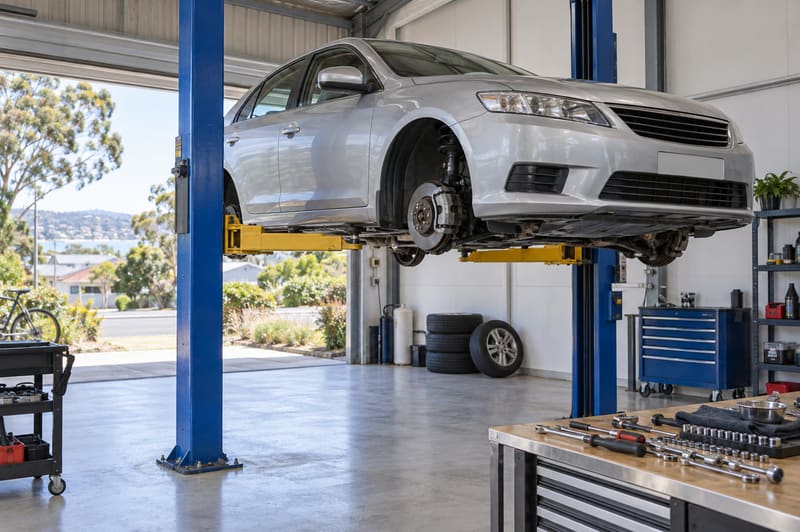
Servicing and your new car warranty
Many owners book every service at the dealer because they believe the warranty depends on it. For most cars, that is not the case.
CHOICE reports that going to an independent workshop will not affect a car's warranty, and cites the ACCC's guidance that any qualified mechanic can service a car and fill out the logbook as long as they use quality parts 2. A maker can set requirements, such as qualified staff and specified parts, but it cannot require dealer servicing 2. The RACV says the same: servicing with an independent mechanic does not automatically void the manufacturer's warranty, provided the work meets the maker's specifications and uses appropriate parts and fluids 1.
Some logbooks carry a dealer stamp box, which can make it look as if only a dealer can sign them. CHOICE points to ACCC guidance that an independent repairer may sign or stamp the relevant page of the service logbook without affecting the warranty 2.
Read the conditions of longer warranties
There are exceptions to check. The RACV cites Mitsubishi as one: years six to 10 of its warranty depend on servicing at a franchised dealership 1. CHOICE also warns that extended warranties may require dealer servicing, so check the policy wording before you choose a workshop 2.
Independent workshops can get the information they need
Since 1 July 2022, a national scheme has required car makers to make service and repair information available for repairers and training providers to buy at a fair price 4. When it launched, the Assistant Minister for Competition said everyone should be free to choose where they get their car serviced 4. In practice it means a qualified independent workshop can get the same kind of technical information as a dealer.
Capped price servicing and the fine print
Many new cars come with capped price servicing, which sets the price of each scheduled service for a period. It helps with budgeting, but CHOICE notes that the capped price may be subject to change at the maker's discretion 2. It also warns that many capped price policies don't cover all the service items specified in the maker's schedule, so replacement parts can cost extra 2.
Before you book, compare what the capped price covers with what the schedule asks for at that interval. Then ask for a quote that includes anything outside the cap.
Service history and resale value
A full service history is one of the first things a careful buyer asks about. The RACV lists lower resale value from an incomplete service history among the costs of skipping services 1, and recommends keeping detailed service records and receipts 1. CHOICE suggests asking the workshop for an itemised account of the labour done and the parts fitted 2, which also makes a better record than a stamp alone.
If you are buying a used car, ask to see the logbook and the receipts behind it. Gaps in the record are worth a question, and a recent major service can be worth paying a little more for. Our safety guide for buyers covers inspecting a car and meeting a seller, and the Car Domain FAQs explain the checks worth doing before you pay. If you are selling, a complete history is one of the simplest ways to show a buyer the car has been looked after.
How to stay on top of your car's servicing
A few habits keep servicing on track without much effort:
- Keep the service schedule handy and note the next due date and odometer reading 1.
- Follow the severe use schedule if you tow, drive dusty roads or mostly do short trips in traffic 1.
- Choose a reputable workshop. CHOICE notes that NSW and WA have repairer licensing schemes, and elsewhere you can check membership of bodies such as the VACC or the Motor Traders Association 2.
- Ask for a written estimate before work starts, and to be contacted before any work that is not on the quote 1.
- Check your tyres between services, using the tread wear indicators as your guide 3.
- Keep every receipt and logbook entry together for the day you sell 1.
The RACV's guide to car services goes into more detail on minor and major services, and the NRMA's tyre guide shows how to read tread wear.
Servicing matters even more for performance cars. Our guide to South Australia's U class licence covers the driver aids the most powerful cars must keep switched on. When you are ready for your next car, browse the cars for sale on Car Domain and use the car loan calculator to plan the finance, including the running costs that come with it.
Sources
- RACV (Royal Automobile Club of Victoria), What you need to know about car services, accessed 2 November 2026
- CHOICE, Car warranties and dealer servicing, accessed 2 November 2026
- NRMA, The two signs your car needs new tyres, accessed 2 November 2026
- Australian Government, the Treasury ministers, Keynote address to the Australian Repair Summit 2022, Canberra, accessed 2 November 2026


