
Reliability is near the top of almost every car buyer's list, and it is one of the hardest things to judge from a test drive. Rankings of the most and least reliable car brands help, but only if you know what they measure. This refreshed guide sets out what the latest dependability study and the latest Australian owner survey found, how warranties compare in 2026, and how to use all of it when you choose a new or used car. Our team has not tested any of these brands; every figure here comes from the published sources listed with this article.
How car reliability is measured
There is no single official reliability score for cars in Australia. The two most useful types of survey measure different things.
Dependability studies count problems
The best known is J.D. Power's U.S. Vehicle Dependability Study. It counts the problems owners report after three years of ownership, expressed as problems per 100 vehicles, so a lower score means a more dependable car 1. The 2026 study covers vehicles from the 2023 model year 2. Its industry average was 204 problems per 100 vehicles, up two on the previous year 1.
The catch for Australian buyers is that the study surveys owners in the United States. Many brands sell the same models here, but some sell different ranges, and some brands sold in Australia are not covered at all.
Owner surveys measure satisfaction
Canstar Blue runs an Australian survey instead. For its 2026 ratings it surveyed 4,316 Australians about the new car brands they had bought from in the last five years 4. They rated their satisfaction from 0 to 10 on six criteria, and reliability was one of them 4. A brand needed at least 30 responses to be included 4.
Predicted reliability scores
A third approach comes from Consumer Reports, the American consumer organisation. Its 2025 brand rankings, published in December 2025, drew on data covering approximately 380,000 vehicles from the 2000 to 2025 model years, plus some 2026 models 3. Each vehicle is assessed across as many as 20 potential problem areas, or 17 for petrol and diesel vehicles 3. The result is a predicted reliability score for each brand out of 100.
Satisfaction is not the same as dependability. A brand can score well because owners like its dealers or its value, even if it has a few more faults. Use both kinds of survey together.

The most reliable car brands in 2026
On the J.D. Power measure, the ten most dependable brands in 2026 were 1:
- Lexus: 151 problems per 100 vehicles 1
- Buick: 160 1
- Mini: 168 1
- Cadillac: 175 1
- Chevrolet: 178 1
- Subaru: 181 1
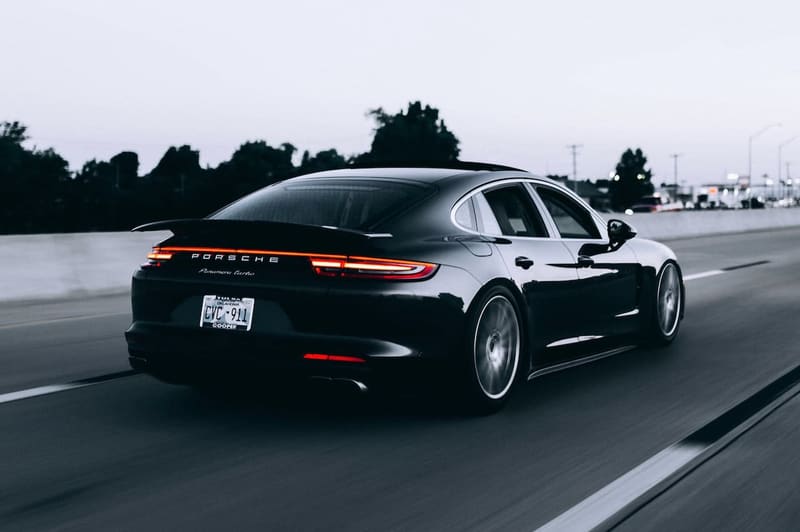
- Porsche: 182 1
- Toyota: 185 1
- Kia: 193 1
- Nissan: 194 1
Not all of those brands are sold new in Australia, or with the same range of models. Of the brands that are, Lexus stands out. It also won Canstar Blue's 2026 award for the most satisfied new car customers in Australia 4, so it leads on both measures.
The study's segment winners point to particular models. They included the Toyota Corolla among compact cars, the Toyota Camry among midsize cars, the Subaru Crosstrek among small SUVs and the Lexus UX among small premium SUVs 2. If you want a hybrid, our list of reliable hybrid cars in Australia looks at several of these in more detail.
What Consumer Reports found
Consumer Reports' 2025 ranking puts Toyota first with a score of 66, ahead of Subaru on 63 and Lexus on 60 3. Honda was fourth with 59 and BMW fifth with 58 3. Among brands sold widely in Australia, Kia scored 49, Ford and Hyundai 48, Audi 44 and Mazda 43 3.
Put the two American studies side by side and a pattern appears. Toyota and Lexus sit near the top of both lists, and so does Subaru 1 3. Some brands move a long way between them: BMW placed fifth with Consumer Reports 3 but did not make J.D. Power's top ten 1. That is why one survey alone is never enough.
The least reliable car brands in 2026
At the other end of the J.D. Power table, the brands with the most reported problems were 1:
- Volkswagen: 301 problems per 100 vehicles 1
- Volvo: 296 1
- Land Rover: 274 1
- Jeep: 267 1
- Audi: 244 1
- Mercedes-Benz: 235 1
The rest of the bottom ten were Infiniti and Acura on 233, GMC on 229 and Ford on 228 1.
Consumer Reports' lowest scores in its 2025 ranking went to Jeep on 28, Ram on 26 and the electric car maker Rivian on 24 3. Jeep is near the bottom of both studies 1 3.
A poor score does not mean every car from a brand will break down. It means owners of that brand's three-year-old cars in the survey reported more problems on average. Many of those problems are minor, as the next section explains.

Why technology now drives reliability scores

Modern reliability surveys are as much about screens and software as engines. In the 2026 study, premium vehicles scored worse than mass-market vehicles in seven of nine problem categories, including features and controls 1. In the infotainment category, problems with phone connections and wireless charging, along with the makers' own apps, made up nearly half of all the problems owners reported 1.
So a low score for a prestige brand does not necessarily mean its engines or gearboxes fail more often. A car packed with features simply has more things that can go wrong, and many of them are irritations rather than breakdowns. When you test drive a car, spend time pairing your phone and using the screens, because those are the features owners complain about most.
How to read a reliability score
A few rules of thumb help when you read any of these rankings. First, look at the gap, not only the order. Two brands a few points apart are close to level, while a brand with half as many reported problems as another is a real difference. Second, check the age of the cars surveyed. A study of three-year-old cars tells you about recent models, while an older car's reliability depends far more on how it has been looked after. Third, remember that a brand's range changes. A brand that launches several new models at once can slip down a table until the early faults are fixed, and then climb again.
Finally, consider what kind of fault matters to you. A buyer who wants a simple, durable car for country driving might care most about engine and transmission problems, while a city commuter may be more bothered by an unreliable phone connection.
Warranty: your protection when things go wrong
Warranty cover has grown a lot. The RACV's September 2026 comparison found that five-year warranties are now widespread, and that eight years or 160,000 km is common for the high-voltage batteries in hybrid and electric cars 5. Some examples from that comparison 5:
- Toyota, Lexus, Honda, Mazda and Subaru: five years with unlimited kilometres
- Audi, BMW, Mercedes-Benz and Volkswagen: five years with unlimited kilometres
- Kia: seven years with unlimited kilometres
- BYD: six years or 150,000 km 5
- MG: seven years with unlimited kilometres, or ten years and 250,000 km if serviced at an authorised centre 5
The longest warranties are often conditional on servicing through the brand's own network from the first service 5. Read those conditions before you rely on the headline number. On a used car, ask whether the remaining warranty transfers to you as the new owner, and keep the service receipts so you can prove the car was maintained if you ever need to make a claim.
How to judge the reliability of a particular car
Brand averages are a starting point. The car in front of you matters more. When you buy a used car:
- Check the service history. A car serviced on time, with receipts, is more likely to stay reliable, and some warranty extensions depend on it 5.
- Look up the model, not only the brand. The same maker can build very dependable and less dependable models, which is why surveys name segment winners 2.
- Check any remaining warranty, including the battery warranty on a hybrid or electric car 5.
- On an electric car, ask for a battery health report. The NRMA suggests using it alongside other checks such as service records and tyre wear 6.
- Get an independent pre-purchase inspection before you pay, whatever the brand.
Our buyer safety guide covers the wider checks for a private sale, including how to avoid scams. If you are still choosing how to pay, our guide to when to buy a car and when to lease and our car loan calculator will help. When you are ready to look, browse the cars on Car Domain.
Where to read the full results
The surveys are worth reading in full, because their detail is more useful than any single ranking, and each one is updated every year. Motor1's summary of the J.D. Power 2026 study lists the top and bottom brands 1, and Canstar Blue's new car ratings show how Australian owners rate each brand 4. The RACV's warranty comparison is updated as brands change their terms 5.
Sources
- Motor1, These Are The Most Dependable Car Brands Of 2026, accessed 2 November 2026
- SlashGear, The Most Dependable Cars You Can Buy (According To JD Power's 2026 Study), accessed 2 November 2026
- Motor1, The Most Reliable Car Brands of 2025, Ranked, accessed 2 November 2026
- Canstar Blue, Best-Rated New Car Brand, accessed 2 November 2026
- RACV, New car warranties in Australia: Compare brands to find the best, accessed 2 November 2026
- The NRMA, 50 EV battery health checks in: what The NRMA is learning, accessed 2 November 2026


