
Toyota is the most familiar badge on Australian roads, but it was not always that way. The company arrived with a few imported four-wheel drives for one of the country's biggest engineering projects, then spent more than half a century building cars in Victoria. When local manufacturing ended, it kept selling more new vehicles than any other brand. This history of Toyota in Australia follows that path, from the first Land Cruisers to the Altona plant and the hybrids that now make up a large share of its sales.
Where Toyota began
Toyota grew out of a Japanese loom maker. Toyoda Automatic Loom Works set up an automobile division on 1 September 1933 1, and its first passenger car, the Model AA, was completed in April 1936 1. The car business began trading on 28 August 1937 as the Toyota Motor Company Ltd., founded by Kiichiro Toyoda 1. The company is still headquartered in Toyota City, in Aichi, Japan 1.
That background in precise machinery shaped the company's reputation for careful manufacturing. By the time Toyota looked to Australia, it was building four-wheel drives tough enough for hard work in rough country.
The Land Cruiser opens the door
Toyota's Australian story began in 1959, when Land Cruisers were imported by Thiess Toyota, a joint venture with the construction company Thiess, for the Snowy Mountains Scheme 2. The scheme needed vehicles that could cope with steep and snowy country, and the Land Cruiser earned a following that it still has.
The Land Cruiser was never built in Australia 2. Instead, a local distributor imported cab chassis versions and fitted them with locally built bodies 2. That small step put Toyota in front of people who worked on the land, the buyers who would later make its utes and four-wheel drives so popular.

Local assembly begins in Port Melbourne
Toyota began building cars here in 1963 3. Assembly by Australian Motor Industries at Port Melbourne had begun by then, and the production line was devoted to the Toyota Tiara 2. Only 1,684 Tiaras were built, between 1963 and 1965 3.
The cars that followed were far more successful. Toyota's own production record lists these locally built models 3:
- Corona: 336,197 built from 1965 to 1987 3;
- Crown: 46,690 built from 1966 to 1980 3;
- Corolla: 601,104 built from 1967 to 1999 3.
The one-millionth locally built Toyota was produced in 1992 2. The Corona and Corolla were small and mid-size cars at a time when many Australian families still drove large six-cylinder sedans, and their reliability won over buyers who wanted something cheaper to run.
A Toyota sold as a Holden
For a time, Toyota also built cars for a rival. Its production record includes the Nova, a Corolla-based model supplied to GM Holden, with 28,128 built 3. Model sharing like this was part of an era when local car makers were under pressure to cut costs, and it is a reminder of how closely the local industry's stories are linked. Our history of Holden in Australia covers the other side of that arrangement.
Altona and the Camry years
In 1994, Toyota moved all of its vehicle manufacturing from the old Port Melbourne site to a plant at Altona, in Melbourne's west 2. Altona became the home of the Camry.
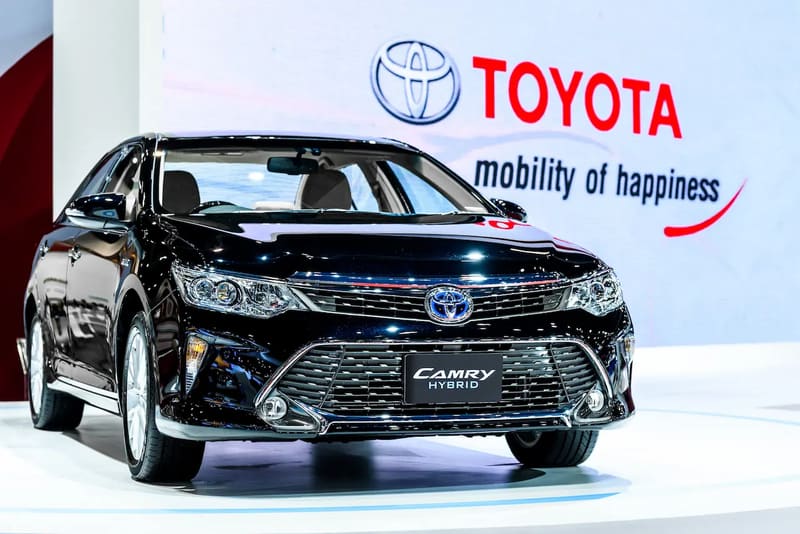
The Camry was Toyota Australia's most important car. The company built 2,168,104 of them from 1987 to 2017 3. Camrys were exported to Thailand from 1993 and to the Middle East from 1996 3, so the plant built cars for buyers well beyond Australia. The two-millionth locally built Toyota came in 2004 2. When the factory closed, the Camry had been Australia's best-selling mid-size car for 23 consecutive years, with 26,485 sold in 2016 alone 5. That is a long run at the top of one of the busiest parts of the market.
Altona also built the larger Aurion, with 184,180 made from 2006 to 2017 3. Local production of the Camry Hybrid began at the end of the 2000s 2. By the time the plant closed, Toyota was the only Australian car maker to have built a hybrid powertrain 5.
Built for export
Altona's cars travelled a long way. Between 1996 and 2017, 1,324,991 Australian-built Toyotas were exported 5. The Middle East was by far the largest market, taking 1,245,914 of them 5. The peak export year was 2008, when 101,668 Camry and Aurion sedans were shipped 5. The plant's busiest year overall was 2007, with 148,931 vehicles built 5.
The end of local manufacturing
On 3 October 2017, Toyota ended 54 years of manufacturing in Australia 3. Across those years, it built 3,451,115 vehicles here 3. Toyota had announced the decision to close the factory in 2014 5. The last models built were the Aurion V6, which ended production in late August 2017, and the seventh-generation Camry 5. The local workforce fell from 3,900 in 2014 to 1,300, with 2,600 employees leaving the company 5.
Toyota marked the end with a Camry Commemorative Edition of 54 cars, one for each year of production 5. One was kept for a heritage centre at Altona and one went to the national museum in Canberra, with the other 52 sold through dealers 5.
Toyota did not leave. It became a national sales and distribution company from 2018 and moved its sales and marketing functions from Sydney to its Melbourne headquarters 3. The Altona site was re-established as a training and product development facility 3. The company also set up the Toyota Community Foundation Australia with an initial fund of A$32 million, with education in Melbourne's west as its first focus 3.
Hydrogen at the old factory
Part of the Altona site found a new purpose. With $3.07 million in funding from the Australian Renewable Energy Agency, Toyota converted it into a hydrogen production and education centre with a refuelling station 6. The site was designed to make about 80kg of renewable hydrogen a day 6. It can refill the tanks of a hydrogen fuel cell car such as the Toyota Mirai in minutes, giving a similar distance between refills to a petrol or diesel car 6.
Toyota in Australia today
Toyota's sales have outlasted its factories. It held the largest share of Australia's new car market for 18 consecutive years from 2003 to 2020 2. In 2025, it was the market leader again, with 239,863 sales and a 19.3 per cent share of the market 4. That was 0.6 per cent down on the year before, but still its second-highest result 4.
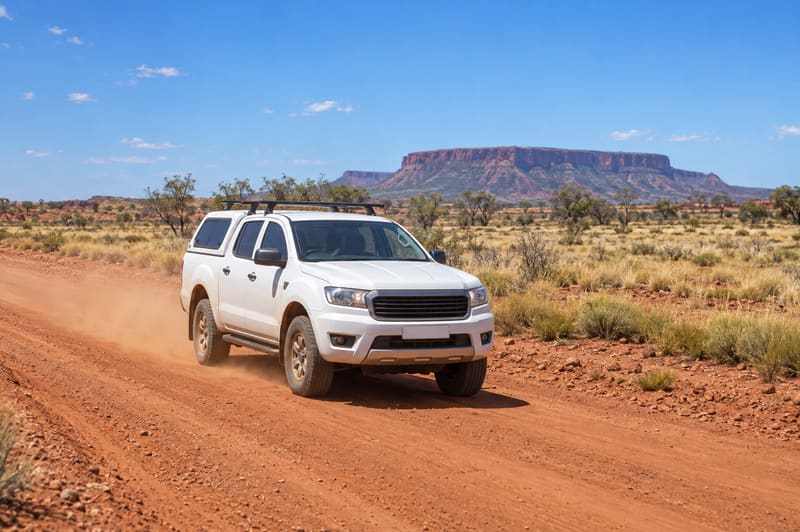
Its utes and SUVs lead the way. The RAV4 was Australia's second best-selling vehicle in 2025 with 51,947 sales, and the HiLux was third with 51,297 4. Only the Ford Ranger sold more, with 56,555 4.
Hybrids now make up a big share
Toyota introduced the first-generation Prius in December 1997 1, and petrol-electric cars have since become central to its range here. In 2025, Toyota recorded around 116,500 hybrid sales in Australia, which was 48.6 per cent of its total 4. That means nearly half of the new Toyotas sold in a year use petrol-electric power.
Buying a used Toyota
The long local history means there are used Toyotas of almost every age for sale. A few points help when you shop:
- A Camry or Aurion built before late 2017 may well have been made at Altona 3.
- Nearly half of new Toyotas sold in 2025 were hybrids, so used hybrids are easy to find 4.
- The HiLux and RAV4 are among the most common vehicles on the road 4, which helps with parts and choice.
Whatever the model, a full service record matters. Our guide on why you should never skip a scheduled service explains what to look for in a logbook. Toyota's former rival in electric cars has its own story in our history of Tesla in Australia, and another maker that once built cars here features in our Volkswagen history.
Read our safety guide for buyers before you meet a seller, plan the finance with the car loan calculator, then browse the cars for sale on Car Domain. For more on the company's past, Toyota's 2017 announcement on the end of local production lists every model built here, and the RACV's review of 2025 new car sales shows where Toyota stands now.
Sources
- Wikipedia, Toyota, accessed 2 November 2026
- Wikipedia, Toyota Australia, accessed 2 November 2026
- Toyota Motor Corporation, Toyota Ends Production in Australia After 54 Years, accessed 2 November 2026
- RACV (Royal Automobile Club of Victoria), Australia's best-selling cars, utes and SUVs for 2025, accessed 2 November 2026
- GoAuto, Toyota exit: More than 3.4 million cars made here, accessed 2 November 2026
- Australian Renewable Energy Agency (ARENA), Melbourne's first hydrogen refuelling station takes shape, accessed 2 November 2026


