
Spend enough time behind the wheel and the cabin becomes part of your day. It is where you sit through the daily commute and the long weekend drive, and the seats take most of the wear. Car seat covers are one of the simplest ways to protect them, freshen up an older interior or make a work vehicle easier to keep clean.
The first version of this post was a short, sponsored piece about covers for one brand of car. This refreshed guide is for every driver. It covers what seat covers are good for, the materials to choose from, how fit affects comfort and safety, and the one safety rule that matters more than any colour or pattern.
What seat covers are for
People fit seat covers for different reasons, and knowing yours makes the choice easier.
- Protection: covers take the spills, mud, sweat and sun that would otherwise mark the original upholstery.
- Comfort: a cover can add padding, or a fabric that feels cooler or warmer than the original trim.
- Looks: a worn or stained interior can look newer for far less than the cost of retrimming.
- Resale: keeping the factory upholstery in good condition can help when it is time to sell, because a tidy interior makes a better first impression on buyers.
A work ute needs different things from a weekend sports car, so think about which of these matters most before you shop.
The safety rule: side airbags
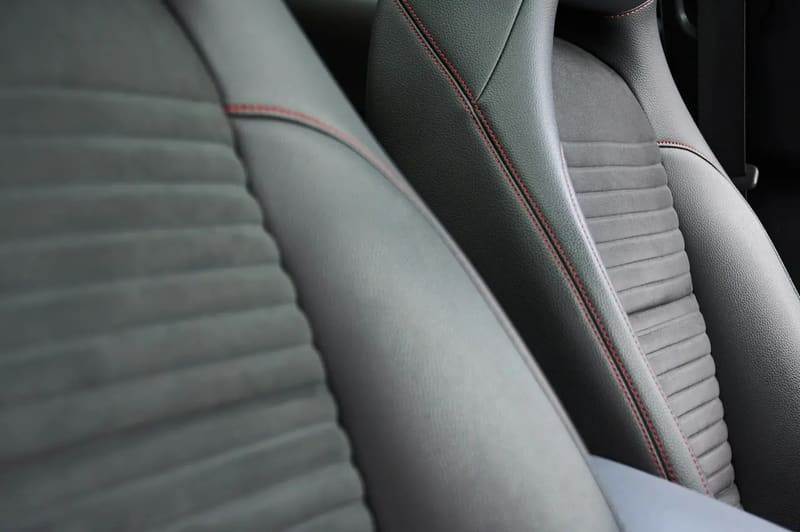
Many modern cars have side airbags built into the outer edge of the front seats. When they deploy, they burst out through a seam in the seat's own trim. A cover that is not designed for that seam can slow or block the airbag.
Car makers are blunt about it. Kia's owner's manual, for example, says "Do not use any accessory seat covers" and warns that "Use of seat covers could reduce or prevent the effectiveness of the system" 1. It also says "Do not install any accessories on the side or near the side air bags" 1.
Not every maker words it that strongly, and some covers are sold as compatible with seat-mounted airbags. Before you buy:
- Read your owner's manual. It is the first and best authority on what can go on your seats.
- Find the airbags. Seats with side airbags are often marked with a small label on the outer side of the seat back, and the manual will show where they are.
- Only consider covers designed for side airbags if your manual allows covers at all, and check that the cover's tear seam lines up with the seat's own seam.
- Fit them exactly as the instructions say. A cover that is twisted or pulled the wrong way can hold the seam closed.
If you are unsure, ask the car's maker or a qualified fitter before you install anything on a seat that contains an airbag.
Seat covers and child restraints
Child car seats add another layer of care. A thick or slippery cover under a child restraint can stop it sitting firmly on the vehicle seat.
The Queensland Government's advice is simple: "Always read and follow the manufacturer's instructions when installing a child restraint" 2. It also recommends checking your vehicle owner's manual for where the anchor points are, and warns against confusing luggage fixing points with child restraint anchor points 2.
In practice that means reading the child restraint's manual and the car's manual before putting any cover or mat under a child seat. If either says not to, do not. Kidsafe Queensland offers child restraint installation services 2, and a professional fitter can check the restraint is tight once the cover is on.
Choosing car seat covers by material
Seat cover materials each have strengths. These are the common ones.
Neoprene
Neoprene is a synthetic rubber, made by DuPont scientists in 1930 5. It is the material of wetsuits, and Wikipedia notes it is used to make waterproof automotive seat covers 5. It keeps its flexibility over a wide temperature range 5. It suits anyone who climbs into the car wet or sandy after the beach.
Canvas
Heavy canvas is tough and easy to hose or wipe down, which is why it is popular in work vehicles and four-wheel drives. It is not the softest material, but it shrugs off muddy boots and working dogs.
Sheepskin
Sheepskin is soft and comfortable in both hot and cold weather, and many drivers like its natural feel. It costs more and needs gentler cleaning than synthetic fabrics.
Leather-look and synthetic fabrics
Vinyl and other leather-look materials wipe clean and look smart, but they can get hot and sticky in summer. Breathable synthetic fabrics are a middle ground: comfortable, available in many colours and patterns, and often machine washable.
Australian sun and heat
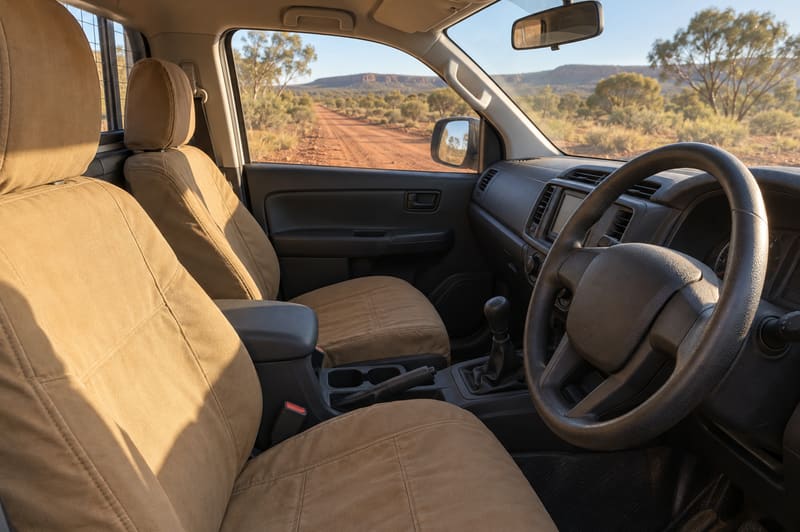
Australia's sun is hard on car interiors as well as people. Cancer Council Australia says the UV Index is at its most damaging in January, with average values forecast to be 11 or more across most of the country on clear days 3. That is in the extreme band, which starts at 11 3.
Ultraviolet light fades and dries out upholstery over time, especially on cars parked outside every day. A good seat cover takes that wear instead of the seat, and a pale, breathable fabric will be more comfortable to sit on after the car has been parked in the sun than a dark vinyl one. A windscreen sunshade helps too, by keeping some of the heat and light off the seats in the first place.
Fit: custom or universal
Fit decides how a cover looks, how comfortable it feels and whether it stays safe.
Universal covers are made to fit many seats. They cost less and are easy to find, but they can bunch up and slide around. A loose cover is more likely to interfere with seat-mounted airbags or seat controls.
Custom-fit covers are made for a particular model and its seat design. They cost more, but they follow the seat's shape and leave room for the headrests and seat controls. They are also more likely to be designed around the car's airbags.
For most drivers who plan to keep a car for years, a custom fit is worth the extra money. Measure the seats or give the supplier the exact model and year, and check whether the car has split-fold rear seats or a centre armrest. Above all, check for seat-mounted airbags.
Comfort on long drives
Comfort is personal, but a few features help on long trips:
- padding that supports the lower back without pushing you forward;
- fabrics that breathe in summer;
- covers that do not block heated or ventilated seats, if your car has them.
If your seats are heated or ventilated, check with the cover maker that the cover will not trap heat or block the vents. A cover that makes a feature stop working is not an upgrade. The same goes for seat belt buckles and seat adjustment levers: once the covers are on, check that every belt clicks in easily and every control still moves freely.
Your rights when you buy
Seat covers bought in Australia come with automatic consumer guarantees under the Australian Consumer Law. The NSW Government says products must, among other things, match their description and be fit for the purpose the business told you they would be fit for 4. They must also be fit for any purpose you made known to the business before buying 4.
The same page explains that a warranty is different. It describes a warranty as "a voluntary promise or commitment made by the business selling the product or service to you", which "operates in addition to a consumer guarantee" 4. Any promises about performance, condition and quality, such as a lifetime guarantee or a money back offer, must also be met 4.
So if you tell a seller you need covers that are safe with side airbags, and they sell you covers on that basis, the guarantee covers that purpose. Keep the receipt and any written description, and remember that the guarantees apply automatically, whatever warranty the business gives or sells you 4.
Looking after your covers
A little care keeps covers looking good:
- Clean spills quickly, before they soak through to the seat underneath.
- Follow the care label. Some covers can go in a washing machine, while others need hand washing or a damp cloth only.
- Check the fit now and then, especially after cleaning, and refit any cover that has shifted.
When you sell the car, think about removing the covers so buyers can see the original seats. A clean set of factory seats is a good sign of a well-kept car. Our guide on why you should never skip a scheduled service covers the other half of keeping a car in good order, and you can browse cars on Car Domain. Read our safe buying tips before you buy, and our frequently asked questions for how the site works.
For more on airbags and accessories, read the airbag section of Kia's owner's manual, and for the UV facts behind protecting your interior, see Cancer Council's summer UV release.
Sources
- Kia owner's manual, Side air bag and front centre air bag (if equipped), accessed 2 November 2026
- Queensland Government, Child restraints: installation, accessed 2 November 2026
- Cancer Council Australia, Cancer Council stresses importance of improved understanding as UV reaches extreme levels this summer, accessed 2 November 2026
- NSW Government, Consumer guarantees, accessed 2 November 2026
- Wikipedia, Neoprene, accessed 2 November 2026


