
Semi-trailers are everywhere on Australian highways, and most drivers pass dozens of them on a long trip without thinking about what they carry. Each of the main types of semi-trailers is built for a particular kind of load, from groceries that must stay cold to excavators too tall for a standard deck. Knowing them helps you read the road. It also helps you understand why some heavy vehicles need extra room at corners and on hills. This guide explains what a semi-trailer is, the common types, the size limits that apply in Australia and how to share the road with them safely.
What a semi-trailer is
Strictly speaking, a semi-trailer is just the trailer. It has no front axle of its own. The RAA puts it simply: a semi-trailer is a trailer without front wheels 7. Its front end rests on the vehicle that tows it, and its own rear wheels carry the rest of the weight 1.
In Australia, the towing vehicle is called a prime mover 1. A plate on the prime mover, called the fifth wheel, supports the front of the trailer and lets it pivot, and a kingpin on the trailer locks into it 1. When the trailer is uncoupled, it stands on landing gear, a pair of legs that can be lowered to hold up the front 1.
Most people use the word semi-trailer, or just semi, for the whole combination of prime mover and trailer 1. That everyday meaning is the one used through most of this guide.
The main types of semi-trailers
The body on the trailer decides what it can carry. These are the types you will see most often on Australian roads.
Box vans
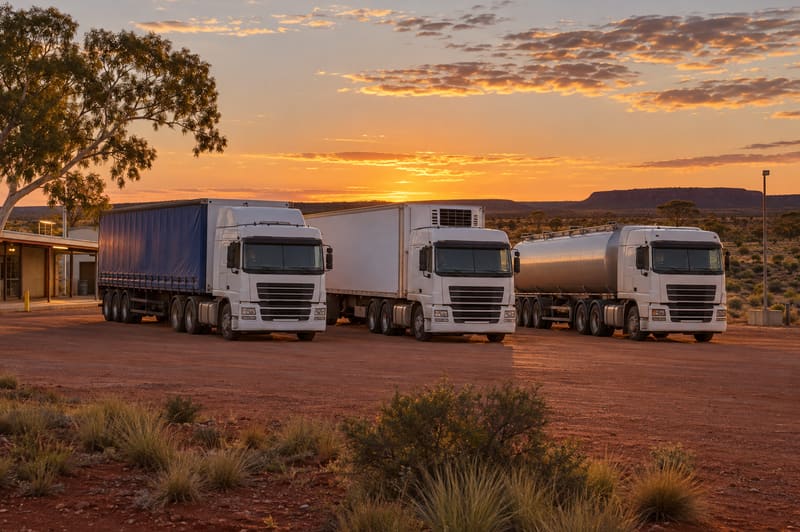
A box or dry van trailer is essentially a metal box on wheels 1. It protects its load from weather and theft, so it suits general freight such as packaged goods. Loading usually happens through doors at the rear.
Refrigerated vans
A refrigerated trailer, often called a reefer, is a box van with insulated walls and a heating or cooling unit 1. It carries food and other goods that must stay at a set temperature. You can often hear the cooling unit running at the front of the trailer when the vehicle is parked.
Curtainsiders
A curtainsider, also called a tautliner, looks like a box trailer but has movable sides made of reinforced fabric 1. The curtains slide back so a forklift can load the trailer from the side. That makes the curtainsider a flexible choice for palletised freight.
Flat tops
A flatbed, or flat deck, trailer is little more than a load floor with removable side rails and a bulkhead at the front 1. It carries steel and building materials that can be strapped down and loaded from any side by crane or forklift.
Low loaders
A low loader, called a lowboy in North America, is a flat trailer with the load floor as close to the ground as possible 1. It is used for heavy equipment 1. Keeping the deck low leaves room under bridges and power lines for a tall machine such as an excavator. Large low loader loads are often oversize, which is why some travel with escort vehicles and warning signs.
Tankers
A tanker is a semi-trailer designed specifically to carry liquids and gases 1. Fuel and milk both travel this way. Because liquid can move inside the tank, tankers are built with care for stability.
Tippers
A tipper, or dump trailer, raises one end so its cargo slides out 1. Tippers carry loose loads such as gravel or grain, and they are a common sight near quarries and road works.
Livestock and container trailers
Livestock trailers usually have two levels, or three for pigs, to carry cattle, horses, pigs or sheep 1. Container trailers have no cargo bed of their own and carry standard shipping containers instead 1. You will see plenty of them around the ports.
Size limits for semi-trailers in Australia
Heavy vehicle sizes are set nationally under the Heavy Vehicle National Law and its regulations, and the National Heavy Vehicle Regulator publishes the limits 6.
Width and height
The general width limit for a heavy vehicle is 2.5 metres 4. Some devices and systems are left out when the width is measured 4.
The general height limit is 4.3 metres 5. Vehicles built to carry livestock, and vehicles built with at least two decks for carrying vehicles, may be up to 4.6 metres high 5. That is why car carriers and stock crates often look taller than other semi-trailers.
Length
For a prime mover and semi-trailer combination, the general length limit is 19 metres, or 20 metres where the trailer has brakes that meet the newer standard 3. The regulator notes that the maximum length increased from 19 to 20 metres for certain combinations that meet the requirements 3. The semi-trailer itself has limits too. For example, the distance from its front articulation point to its rear overhang line must not exceed 9.5 metres 3.
B-doubles and road trains
Bigger combinations carry more freight per driver, and Australia uses them widely.
B-doubles
A B-double is a prime mover towing two semi-trailers. The second trailer rests on a fifth wheel on the back of the first, with no front wheels of its own 7. The standard B-double length limit is 25 metres, and under specific conditions a B-double may be up to 26 metres long 3. B-doubles can only use routes approved by road authorities 7.
Although a B-double has two trailers, it is not a road train 7. An A-double, which links its trailers with a drawbar, is classed as a road train 7.
Road trains
Road trains are the longest vehicles on Australian roads. Triple road trains and some quad combinations can be up to 53.5 metres long, and in some parts of Australia super quad road trains up to 60 metres are permitted 2. Triples run in western New South Wales, western Queensland, South Australia, Western Australia and the Northern Territory 2.
Long combinations carry a warning. The RAA notes that combinations longer than 22 metres, up to 30 metres, must display a long vehicle sign on the last trailer 7.
Sharing the road with semi-trailers
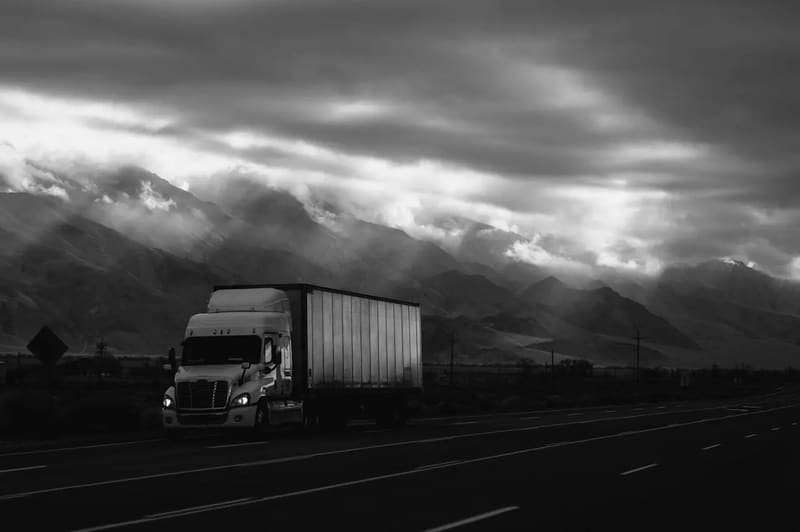
For car drivers, the most useful thing to know about semi-trailers is how much room they need. The National Heavy Vehicle Regulator's We Need Space campaign asks road users to stay out of blind spots and to learn how to overtake heavy vehicles safely 9. It also asks them to avoid overtaking heavy vehicles that are turning 9. As the regulator noted at the launch, these vehicles are hard to manoeuvre and have large blind spots 9.
Blind spots
The Queensland Government's rule of thumb is simple: if you can't see the driver's mirror, the driver can't see you 8. Blind spots sit in front of the cab, beside the driver's door, directly behind the trailer and along the passenger side, where the blind spot can extend out three lanes 8.
Turning vehicles
Heavy vehicles with a sign reading DO NOT OVERTAKE TURNING VEHICLE may use more than one lane to turn 8. When the indicator is flashing, expect the vehicle to need extra space, and stay behind it until the turn is complete 8.
Overtaking
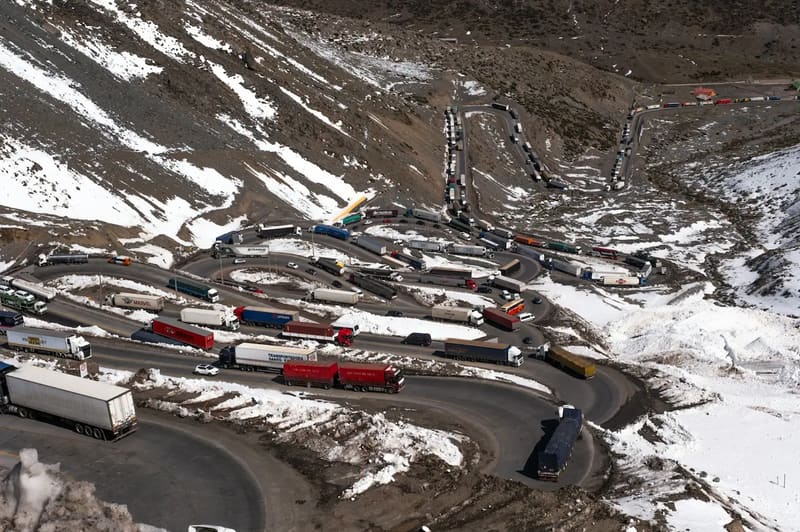
Never overtake a heavy vehicle on a curve or a hill, because you cannot see far enough ahead 8. With a road train, expect it to stay on the bitumen when you overtake 8. Slow down and pull over when one approaches on a narrow road 8. Do not follow too closely, and leave extra room in wind, rain or fog 8.
Why the types of semi-trailers matter to car buyers
Most car buyers will never drive a prime mover, but they share every highway with them. A car with good visibility and modern driver aids makes long trips past heavy vehicles easier. Our guide to South Australia's U class licence explains how stability control works, and our guide on why you should never skip a scheduled service covers the tyres and brakes that keep a car safe on a long trip.
If you are planning a big drive, our list of the most scenic drives in the world has ideas. Read our safety guide for buyers before you meet a seller, then browse the cars for sale on Car Domain. For the full rules, the National Heavy Vehicle Regulator's length limits and the Queensland Government's guide to sharing the road with heavy vehicles are good places to start.
Sources
- Wikipedia, Semi-trailer, accessed 2 November 2026
- Wikipedia, Road train, accessed 2 November 2026
- National Heavy Vehicle Regulator, Length, accessed 2 November 2026
- National Heavy Vehicle Regulator, Width, accessed 2 November 2026
- National Heavy Vehicle Regulator, Height, accessed 2 November 2026
- National Heavy Vehicle Regulator, Mass and dimension, accessed 2 November 2026
- RAA (Royal Automobile Association of South Australia), What's a B-double truck?, accessed 2 November 2026
- Queensland Government, Sharing the road with heavy vehicles, accessed 2 November 2026
- National Heavy Vehicle Regulator, We Need Space aims to make Australia's roads safer for all users, accessed 2 November 2026


