
Are electric cars really better for the environment than petrol cars, once you count the factory and the battery as well as the power station? It is a fair question in Australia, where much of our electricity still comes from coal.
An earlier version of this post answered it with a single carmaker's view: that a rapid switch to electric cars here would do more harm than good. This refreshed version keeps that argument in view, because it raises real points, but weighs it against the wider evidence. Every figure below is checked against the sources listed at the end of the page.
Where the doubt came from
The claim in our original post traced back to Mitsubishi Motors. In a 2022 keynote presentation, the company argued that in countries where coal and oil power generation is high, battery electric vehicles have the highest carbon dioxide emissions, and petrol and diesel cars the lowest 1. It said plug-in hybrids are most advantageous in countries with moderate emissions from power generation, such as Japan 1.
The idea behind that argument is sound. An electric car has no exhaust, but the electricity that charges it has to come from somewhere, and building its battery has a carbon cost of its own. Where the power is dirty, the advantage shrinks. The question is how much, and whether Australia falls on the wrong side of the line.
What a lifecycle comparison counts
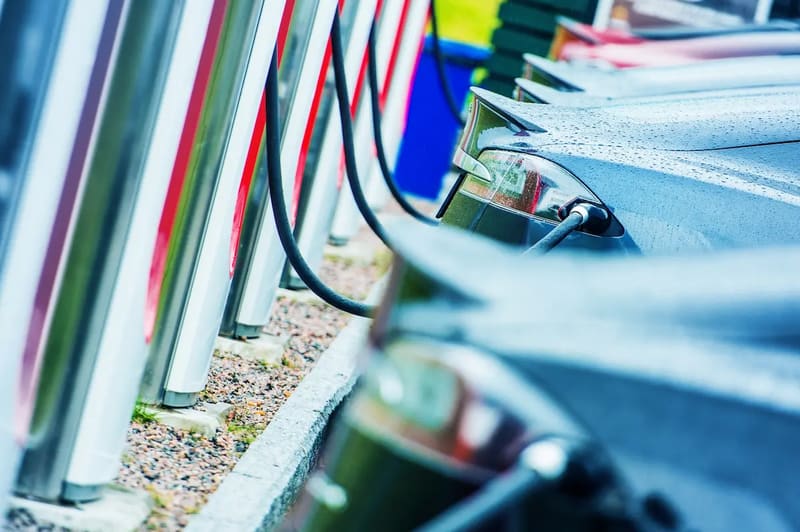
A fair comparison follows a car from cradle to grave. That means the emissions from making the vehicle and its battery, from producing the fuel or electricity it uses, and from driving it for its whole life. The International Energy Agency's analysis uses this approach, assuming 15 years of operation, or about 200,000 km 2.
On that basis the IEA found that a medium-size battery electric car has about half the lifecycle emissions of an equivalent petrol or diesel car, and more than 40 per cent less than an equivalent conventional hybrid 2. It also found that even without further improvements to power grids, battery electric car emissions would still be about 30 per cent lower than those of combustion-engine cars 2.
Why the power grid matters
The IEA is clear that the grid makes a big difference. It says cleaning up power grids around the world is what gets the most environmental benefit out of battery electric cars 2.
Its country examples show how wide the range is. In the United States, battery electric car lifecycle emissions are around 45, 60 and 65 per cent lower than those of plug-in hybrids, hybrids and combustion cars respectively 2. In China the gaps are smaller, at about 20, 30 and 40 per cent 2. In India, where coal dominates power generation, a battery electric car saves less than 10 tonnes of carbon dioxide equivalent over its life compared with a medium-size petrol or diesel car 2.
So Mitsubishi's point is real at the extreme: the dirtier the grid, the smaller the gain. But in the IEA's examples, even the coal-heavy case still shows a saving rather than a loss.
Is an EV better for the environment in Australia?
Our original post said most of Australia's electricity came from coal. That is no longer true. In 2024, coal produced 45 per cent of Australia's total electricity generation, down from 46 per cent in 2023 3. Renewable sources produced about 36 per cent, or an estimated 102,403 gigawatt hours 3.
Fossil fuels as a whole still produced 64 per cent of generation that year, from total generation of about 283,920 gigawatt hours 3. So Australia's grid is cleaner than it was, but it is still more fossil-heavy than many. In the IEA's terms, Australia sits between the cleanest and the most coal-dependent grids, and every year that renewables grow, the gap in favour of electric cars widens.
An Australian tool reached a similar conclusion. In December 2023 the Electric Vehicle Council, an industry body that promotes electric vehicles, launched a calculator built on analysis by the European group Transport and Environment 4. It found that, on average, electric cars generate about half the emissions of equivalent petrol cars over their life, and that they still produce lower net emissions when charged from the existing grid 4. Keep in mind who published it, but note that its result is close to the IEA's.
The battery's share
Building the battery adds to an electric car's manufacturing emissions, and the battery's chemistry changes how much. The IEA found that the emissions per kilowatt hour of lithium iron phosphate (LFP) batteries are about one-third lower than those of nickel manganese cobalt (NMC) batteries at the pack level 2. For LFP batteries, manufacturing makes up almost half of total battery emissions, while for NMC batteries it is about 15 per cent, because processing the minerals is the larger share 2.
Size matters as well. A large battery electric SUV emits only around 20 per cent more than a medium-size battery electric car over its lifetime 2, so even a big electric car keeps much of the advantage. Looking ahead, the IEA expects the gap to widen: for cars bought in 2035, a combustion car would produce almost two and a half times the lifetime emissions of a battery electric car under current policy settings 2.
What about recycling?
Batteries are the other big concern, and the original post said we did not know how to recycle them. The picture is better than that, but there is a lot of room to improve.
CSIRO reported that, as of 2021, only about 10 per cent of Australia's lithium-ion batteries were being recycled, against about 5 per cent globally 5. Australia produces around 3,300 tonnes of lithium-ion battery waste each year 5. Yet depending on the process used, between 50 and 95 per cent of the materials in these batteries can be recovered 5. In other words, the technology exists; the collection and processing system is still catching up.
Hybrids, plug-ins and what buyers chose
The middle path that Mitsubishi argued for is popular. In 2025 Australians bought 199,133 hybrids, up 15.3 per cent, and 53,484 plug-in hybrids, up 130.9 per cent 6. Battery electric vehicle sales totalled 103,269, or 8.3 per cent of the market 6.
A plug-in hybrid's real-world emissions depend on how you use it. If you charge it often and most of your trips are short, much of your driving can be electric. If you rarely plug it in, it behaves mostly like a petrol car carrying the extra weight of a battery. The IEA's figures show a battery electric car ahead of a plug-in hybrid in the markets it compared 2, but the right choice for you depends on your driving and where you can charge.
Choosing a cleaner car for your driving
If lower emissions are part of why you are buying, a few choices make a bigger difference than the badge on the car.
- How you charge. Charging from rooftop solar or a renewable electricity plan cuts the emissions from each kilometre.
- The size of the car. A smaller car with a smaller battery has a smaller manufacturing footprint than a large one.
- How long you keep it. The longer a car stays in use, the more its manufacturing emissions are spread across its life.
- How you drive. Smooth driving and correct tyre pressures help any car, electric or not.
The evidence suggests that, for most Australian drivers, a battery electric car already produces lower lifetime emissions than an equivalent petrol car, and the advantage grows as the grid gets cleaner. A hybrid or plug-in hybrid can be a sensible step if an electric car does not suit your needs yet.
When you are ready to buy, browse cars on Car Domain, and use our loan calculator to work out repayments. If you need a ute that can plug in, read our Ford Ranger buyer's guide, and for more on the company behind the original claim, see our history of Mitsubishi Motors Australia. The IEA's Global EV Outlook explains its lifecycle method, and CSIRO's battery recycling article covers what happens to old batteries.
Sources
- MarkLines, 6th ReVision Mobility Summit: Keynote presentation by Mitsubishi Motors, accessed 2 November 2026
- International Energy Agency, Global EV Outlook 2024: Outlook for emissions reductions, accessed 2 November 2026
- Australian Government, Department of Climate Change, Energy, the Environment and Water, Australian Energy Statistics, Table O: Electricity generation by fuel type 2023-24 and 2024, accessed 2 November 2026
- Australasian Fleet Management Association, New online tool to determine EV and ICE emissions launched, accessed 2 November 2026
- CSIRO, Recycling lithium-ion batteries for a brighter tomorrow, accessed 2 November 2026
- Federal Chamber of Automotive Industries, Australia's new vehicle market remains resilient, accessed 2 November 2026


