
Almost every car picks up scratches. A shopping trolley, a tight garage, a branch on a narrow track or a careless wash can all leave marks in the paint. The good news is that many light scratches can be fixed at home with a car scratch remover or a polishing compound. The catch is that these products only work on damage that sits in the top layer of paint. This guide explains how car paint is built, how to judge a scratch, how to use a remover without making things worse and when touch-up paint or a professional repairer is the better answer.
How car paint is built
To understand what a scratch remover can and cannot do, it helps to know what sits on a car's panels. The NRMA describes three layers 1:
- Primer or undercoat: applied directly to the body panels to protect them from contaminants, air and moisture, and to help the colour coat stick 1.
- Colour or base coat: the colour on top of the primer, and what you see when you look at the car 1.
- Clear or top coat: a transparent layer that adds hardness, shine and UV protection 1.
These layers are thin. Modern automotive paint has a total thickness of around 100 micrometres, or 0.1 millimetres, across all of its layers 3. That is why there is so little room for error when you rub at a scratch. The clear coat is the layer that faces the weather and must resist abrasion 3, so it is usually the one that takes the first scratch.
Older cars and solid colours
Not every car has a separate clear coat over every colour. Clear coat was not used on solid colours until the early 1990s 3. On an older car with solid paint, a polish works directly on the colour layer. Go gently, and check your cloth for colour transfer as you work.
How to judge a scratch's depth
Before buying anything, work out how deep the scratch is. Wash and dry the area first, so you are looking at the scratch and not at dirt 2.
The fingernail test
Gently run a fingernail across the damage, at a right angle to the scratch 2. If your nail passes over it smoothly, a home repair may well work 2. If the scratch catches your nail, it is deeper. You may need help from a professional detailer or repair shop 2.
Look at the colour inside the scratch
The NRMA suggests checking whether the colour underneath has been disrupted 1. If you can see grey or beige, the scratch has reached the undercoat 1. If you can see black plastic or bare metal, the damage is worse again 1. Neither of those can be polished away, because there is no colour left to reveal.

What a car scratch remover can fix
Scratch removers and polishing compounds work by removing a very thin amount of clear coat around the scratch, until the edges blend and the mark no longer catches the light. According to the NRMA, scratches confined to the clear coat can be buffed out with a polishing or cutting compound 1.
Turtle Wax's guide to its scratch remover says light to moderate scratches and scuffs can be repaired at home, along with paint transfer, where another surface has left its colour on your car 2. Paint transfer is common after a light scrape against another car or a painted pole, and it often looks far worse than it is.
Choosing how aggressive to go
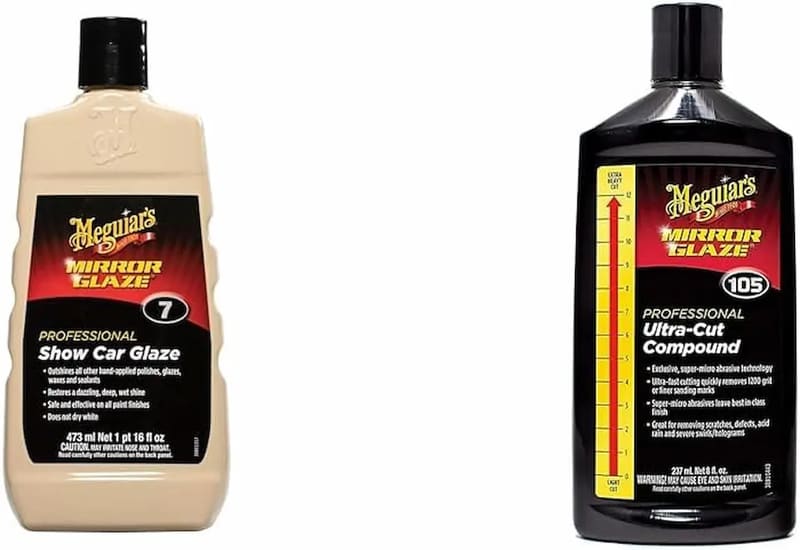
The most important rule is to start gently. The NRMA's advice is to start with the least aggressive compound you can and work your way up, because the aim is to remove as little clear coat as possible 1. A fine polish or a scratch remover is a sensible first step. A cutting compound, which removes material faster, is for marks that a fine product cannot shift.

When there are many marks
If the whole car is covered in fine scratches or swirl marks, spot repairs are not the answer. Turtle Wax recommends a polishing or rubbing compound over the whole affected area instead 2. On a large job, many owners use a machine polisher, and some kits are built around foam pads that fit a polisher or drill. Read the product's instructions carefully before you start.
How to use a scratch remover step by step
Turtle Wax sets out a simple process for its own product, and the same approach suits most scratch removers 2:
- Wash and dry the car, or at least the work area, so you do not grind dirt into the paint 2.
- Check the depth with the fingernail test 2.
- Put a small dot of remover, about 2cm across, on a clean folded microfibre cloth or foam pad 2.
- Work it over the scratch in small circles, adding more product as needed 2.
- Refold the cloth to a clean side and wipe off the excess 2.
- Inspect the area and repeat until the scratch is gone and the area blends in 2.
Take your time
Pressure is the enemy. Turtle Wax warns not to apply much pressure 2. It suggests allowing about 30 minutes per repair, because rushing tends to lead to pressing harder on the clear coat 2. Work in shade on a cool panel, and stop to check your progress often.

When a scratch remover is not enough
Some scratches are simply too deep for a remover, however long you work at them.
Touch-up paint
For thin but deep grazes and for stone chips, the NRMA suggests a touch-up pen 1. The pen's strokes can show, so polishing afterwards improves the result 1. For wider areas, it suggests a spray can, which needs careful masking to prevent overspray 1. Turtle Wax's method also finishes this way for a scratch that will not polish out: fill it with colour-matched touch-up paint and let it dry 2. Then level and blend it with the remover 2.
Bare metal and rust
If a scratch has gone through all the paint layers, the panel material matters. Plastic and aluminium can usually be left for a while, but on a steel panel it is wise to act quickly 1. Steel can oxidise and rust quickly if left exposed to the elements, especially salt and water, and rust can spread under the surrounding paint 1. Seal exposed steel with primer before rust starts, or take the car to a body repairer if you are unsure 1.
Dents
A dent is a different problem. Because paint is so thin, a dent cannot be buffed out, and the panel itself has to be reshaped 1. Paintless dent removal is a specialist method that reshapes the panel without filler or new paint 1. It is not cheap, but it can keep the original paint intact 1.
Fixing scratches before you sell your car
Presentation matters when you sell. A buyer's first impression comes from the paint, and a few obvious scratches can make a well-kept car look neglected. A careful session with a scratch remover can lift a car's appearance for very little cost, as long as you stay within the clear coat 1.
Be honest about anything you cannot fix. Deep scratches and rust are worth mentioning to a buyer up front, and a full service record helps show the car has been looked after. Our guide on why you should never skip a scheduled service explains what buyers look for in a logbook. If you plan to sell an older classic, our history of Holden shows how much interest the early cars still draw.
Read our safety guide for tips on meeting buyers, and see the Car Domain FAQs for how the site works. When it is time for your next car, browse the cars for sale on Car Domain.
For more detail, the NRMA's guide to fixing scratches and dents covers touch-up paint and dent repair, and Turtle Wax's guide to using a scratch remover walks through the steps.
Sources
- NRMA, How to fix scratches, dents and imperfections in your car's paint, accessed 2 November 2026
- Turtle Wax, How To Use A Car Paint Scratch Remover, accessed 2 November 2026
- Wikipedia, Automotive paint, accessed 2 November 2026


